A tree doesn't have to be dead to be dangerous.
Many of the trees that fail during storms or drop large limbs still have green leaves and appear healthy from a distance. That's what makes tree hazards difficult for homeowners to spot. Problems often develop slowly, and by the time obvious symptoms appear, the tree may already be weakened.
Throughout Chalfont and Warminster, trees are exposed to strong storms, saturated soils, insects, disease, and the natural effects of aging. While not every concern requires tree removal, recognizing the warning signs early can help you avoid property damage and make better decisions about the trees on your property.
Here are some of the most common indicators that a tree deserves a closer look from an arborist or tree inspection company.
Visible Signs a Tree May Be Unsafe
Some warning signs are easy to spot if you know what to look for.
Large dead branches are among the most common concerns. Dead limbs become brittle over time and may break without much warning. Branches hanging over roofs, driveways, walkways, or outdoor gathering areas deserve immediate attention.
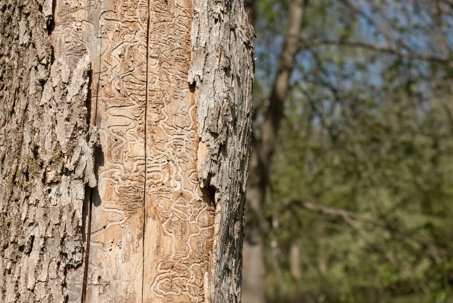
Cracks in the trunk or major limbs are another red flag. While some surface cracks are minor, deep splits can weaken the tree's ability to support itself.
Pay attention to:
- Large dead branches in the canopy
- Vertical cracks in the trunk
- Splits where major limbs connect
- Peeling bark accompanied by dead wood
- Hanging or partially broken branches after storms
These conditions don't always mean a tree is failing, but they often warrant further evaluation.
Warning Signs Near the Base of the Tree
Many serious tree problems begin where homeowners rarely look.
The base of a tree and the surrounding root zone can reveal important clues about structural stability.
If you notice mushrooms repeatedly growing around the trunk, it may indicate decay occurring below ground. Some fungi feed on roots and buried wood, which can weaken a tree's support system over time.
Other signs worth watching for include:
- Soil lifting around the base
- Exposed roots that weren't visible before
- Root damage from construction activity
- Sudden leaning after heavy rain
- Cavities near ground level
Because root problems often develop out of sight, changes around the base of the tree should never be ignored.
When a Leaning Tree Becomes a Concern
Not every leaning tree is dangerous.
Many trees naturally develop a slight lean and remain stable for decades. What matters is whether the lean is changing.
A tree that suddenly shifts position, especially after a storm, may be experiencing root failure or structural instability.
Homeowners should pay close attention if a lean is accompanied by:
- Cracked soil around the roots
- Newly exposed roots
- A lifted root plate
- Visible movement during windy conditions
Recent changes are usually more concerning than a tree that has leaned the same way for years.
Hidden Problems Inside an Apparently Healthy Tree
One of the most frustrating aspects of tree care is that serious defects aren't always visible from the outside.
A tree may leaf out normally while internal decay slowly spreads through the trunk. Cavities, hollow sections, and weakened wood can develop for years before obvious symptoms appear.
This is particularly common in older trees that have experienced storm damage, previous pruning wounds, or disease.
An experienced arborist can often identify signs of internal decay that homeowners may overlook, including weak branch attachments, hidden cavities, and areas where structural strength has been compromised.
Trees That Changed Recently Deserve Attention
Homeowners often notice when something "just looks different."
That instinct is worth paying attention to.
Trees usually decline gradually. When a healthy-looking tree suddenly begins dropping leaves early, develops dead branches, or changes appearance over a single growing season, it may be responding to stress, disease, root damage, or environmental changes.
Look for:
- Sudden thinning of the canopy
- Branches dying back unexpectedly
- Smaller leaves than normal
- Premature leaf drop
- Reduced seasonal growth
Rapid change is often more important than the symptom itself.
Storm Damage Isn't Always Obvious
After a severe storm passes, most homeowners look for broken branches on the ground.
The problem is that some storm damage isn't immediately visible.
A tree may survive a storm but still develop weakened branch unions, hidden cracks, or compromised roots that increase the risk of future failure.
Following major weather events in the Chalfont and Warminster area, it's a good idea to inspect trees for:
- Hanging limbs
- Split branches
- Fresh cracks
- New leaning
- Branches rubbing or shifting
If a tree is located near your home, garage, driveway, or frequently used outdoor space, a post-storm evaluation may be worthwhile.
When Should You Call an Arborist?
Not every tree issue requires immediate action.
In fact, one of the most common misconceptions homeowners have is assuming every concerning tree needs removal.
Sometimes the solution is pruning. Sometimes it's ongoing monitoring. In other cases, cabling, bracing, or plant health treatments may help extend a tree's life safely.
A professional tree inspection provides a clearer picture of:
- Structural condition
- Tree health
- Potential hazards
- Corrective options
- Whether tree removal should be considered
The goal isn't always to remove a tree. It's to understand its condition before a minor concern becomes a larger problem.
Don't Wait Until a Fallen Tree Creates an Emergency
Many tree failures happen after warning signs have been present for months or even years.
Dead branches, shifting soil, trunk cracks, sudden leaning, and signs of decay are all reasons to investigate further. Addressing concerns early often provides more options and helps homeowners avoid emergency situations that may require a fallen tree removal service.
If you've noticed changes in a tree on your property, a professional inspection can help determine whether the tree remains safe or if corrective action is needed.
Reverie Tree Experts provides tree inspections, arborist evaluations, tree removal, and fallen tree removal service throughout Chalfont, Warminster, and nearby communities.
To schedule an assessment, call (267) 508-7102 or book a visit online.